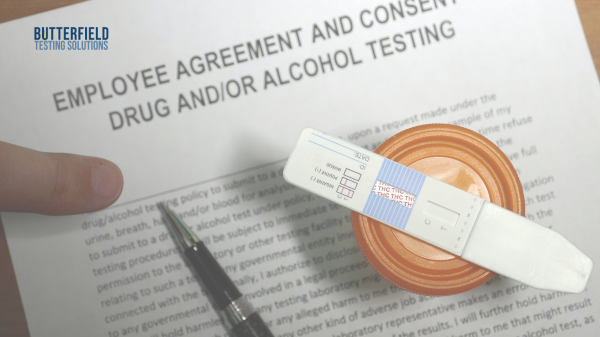
We see it time and time again: a positive DOT drug test creates an instant shift in your work atmosphere. One second your team is running as planned, and the next you’re face-to-face with a laundry list of very strict regulations and safety steps that all have to be handled with care.
The truth is most companies only learn the details of these rules after their first violation. We know firsthand that the experience can feel extremely overwhelming, but knowing what a positive test means for your liability and compliance makes the process so much easier to manage. That’s why we wanted to provide this brief guide to your liability and compliance needs in the event of a positive DOT test.
What a Positive DOT Drug Test Triggers Under Federal Rules
The DOT regulates safety-sensitive workers in trucking, busing, aviation, rail, pipeline, and other transportation fields. Any worker in a covered job has to follow strict drug and alcohol testing rules. When a drug test comes back positive, the employer has to act right away.
A positive result triggers three outcomes right away:
- The employee must be taken out of all DOT-regulated responsibilities
- The employer must give the employee a list of Substance Abuse Professionals (SAPs)
- The company must begin documenting the return process in case of future audits or inspections
These steps happen whether the violation involves marijuana, cocaine, opioids, amphetamines, or any other DOT-tested substance.
But most employers don’t realize how fast the response needs to be. The DOT treats any delay as a failure to follow regulations, and that’s where your liability begins to grow if the response isn’t handled correctly.
How a Positive Test Impacts Your Company’s Liability
A positive DOT drug test exposes the company to several potential risks if the rules aren’t followed in the aftermath of an employee’s positive test.
1. Liability for Allowing a Violating Employee to Work
If an employer lets an employee stay in a safety-sensitive role after a positive test, the company can face legal penalties. Even a short delay creates a major risk. If an accident occurs while the worker is still active in a safety-sensitive role, the employer could be held responsible for major damages.
Butterfield Testing Solutions often hears from companies that want to avoid mistakes during the removal phase, and a clear system is the best way to avoid serious problems later.
2. Liability for Poor Documentation
DOT auditors may ask for all documents related to a violation. A company that can’t produce clean records may face severe fines. Missing paperwork can make it look like the employer didn’t follow the required steps.
Key documents might include:
- The positive result
- The date the employee was removed
- The list of SAPs given to the employee
- All return to duty testing records
- Follow-up testing schedules and results
Accurate records protect your company if questions come up down the road.
3. Liability for Not Following the SAP’s Plan
The SAP directs the return process from start to finish, but the employer’s responsibility is to follow that plan exactly. Any skipped test, missed step, or attempt to shorten the plan places the company in violation of federal rules.
4. Liability During the Follow-Up
Some safety managers assume liability ends once the employee returns to duty. That actually isn’t the case. The SAP can require months or years of follow-up tests. If an employer forgets to schedule a test or doesn’t track the deadlines, the company can face significant penalties.
At Butterfield we provide follow-up testing for plenty of companies to help them stay organized and compliant through this whole process.
The Best Approach for Limiting Liability
Following every required step of the process after a positive test will keep you compliant and reduce your legal exposure. Here’s a simple version of that process after a positive test:
- Immediate removal from duty
- Employee receives a list of SAPs
- Employee meets with the SAP
- SAP gives an education or treatment plan
- Employee completes the plan
- SAP approves the worker to take a return to duty test
- Worker takes a directly observed return to duty test
- A negative test result allows the worker to return
- Follow-up testing begins
- Employer keeps all records for audit purposes
A mistake at any stage affects your compliance and potential liability, but you’re not alone! Butterfield can help you adhere to the process from start to finish.
How a Positive Test Affects Your Compliance Program
A positive test exposes gaps in your testing program. Safety managers often discover issues they did not notice before. Some of the most common gaps include:
- Inconsistent testing schedules
- Weak communication procedures
- Missing policies in the company handbook
- Limited understanding of DOT rules among team leaders
- Disorganized records
A positive test forces the company to fix these issues quickly. We often see employers use the experience as a turning point to update their entire testing system for the future.
Key Points for Employers
Let’s close things out with a roundup of the key points for your company to remember:
- A positive DOT drug test must trigger immediate removal
- The employee must receive a full list of SAPs
- The SAP directs the entire return process
- The return test cannot be scheduled until the SAP approves
- Follow-up tests continue for the period the SAP requires
- Accurate records protect the company from liability
- Butterfield Testing Solutions supports employers at each step
A positive DOT drug test can obviously bring up a lot of stress and concern for any company, but with the right steps and a dependable testing partner the process becomes so much easier to handle.
If your company needs support with compliance or testing after a violation, we’re ready to help! And if you have any questions, it’s as simple as reaching out.
Sources:
- United States Department of Transportation. 49 CFR Part 40: Procedures for Transportation Workplace Drug and Alcohol Testing Programs. Office of Drug & Alcohol Policy and Compliance, https://www.transportation.gov/odapc/part40.
- United States Department of Transportation. “Employer.” Office of Drug & Alcohol Policy and Compliance, https://www.transportation.gov/odapc/employer.
- Federal Motor Carrier Safety Administration. “Return-to-Duty Process.” FMCSA, https://www.fmcsa.dot.gov/regulations/drug-alcohol-testing/return-duty.
- United States Department of Transportation. What Employers Need to Know About DOT Drug and Alcohol Testing. Office of Drug & Alcohol Policy and Compliance, https://www.transportation.gov/odapc/employer_handbook.
- United States Department of Transportation. “Substance Abuse Professional (SAP).” Office of Drug & Alcohol Policy and Compliance, https://www.transportation.gov/odapc/sap