Keeping large trucks, buses, aircraft, and pipelines safe is no small job. One key rule that helps is the random drug testing program required by the United States Department of Transportation (DOT). If you manage drivers, mechanics, pilots, or other safety‑sensitive workers, you need to know how this program works and why it matters.
This guide covers the basics of DOT random drug testing, from the laws that set the rules to the steps involved in picking names and handling results. We will use clear language and real‑world tips so you can run a program that meets the rules and keeps your team on the road, in the air, or at the controls with full confidence.
Why DOT Has a Random Testing Rule
The public depends on safe travel and safe cargo. Random testing helps by lowering the risk of drug use on the job. Workers know a test can happen at any time, so the program acts as a strong reminder to stay clean. The extra layer of safety protects lives, property, and a company’s good name.
Who Falls Under the DOT Rule?
Random testing applies to workers in roles called “safety‑sensitive.” These roles vary by mode of transport:
- FMCSA (trucking) – CDL drivers who operate vehicles over 26,000 pounds or haul hazardous goods.
- FAA (aviation) – Flight crew, flight attendants, mechanics, and ground security staff.
- FTA (transit) – Bus and rail operators, control center crew, and mechanics.
- PHMSA (pipeline) – Pipeline controllers and emergency response staff.
- FRA (railroad) – Engineers, conductors, and signal workers.
- USCG (coast guard) – Crew who operate vessels required to carry USCG documents.
If a worker performs even one of these tasks during the year, they must be in the random pool.
Required Testing Rates
DOT sets a yearly rate for how many tests a company must perform. Rates can change, so always check the latest rule, but as of this writing most modes require:
- Drugs – twenty‑five percent of the pool each year.
- Alcohol – ten percent of the pool each year (for modes that test alcohol).
The rate applies to the average number of covered staff. For example, a trucking firm with one hundred qualified drivers must complete at least twenty‑five drug tests in the calendar year. If you grow or shrink during the year, adjust the count so you meet the target by December thirty‑one.
Building the Random Pool
Every safety‑sensitive worker goes into a single pool per mode, not per site. Pool lists must be up to date with hires, transfers, and departures. Many firms use software or a third‑party administrator (TPA) like Butterfield Testing Solutions to keep the list accurate.
Key points:
- A worker can appear in more than one pool if they work in more than one mode.
- Supervisors, office staff, or owners join the pool if they hold a CDL or other covered duty and still perform that duty.
- If you share a pooled program with other firms, you must keep proof that your share of tests meets the rate.
The Random Selection Process
Selections must use a computer or table of random numbers. Hand picks are not allowed. Each draw must give every covered worker an equal chance to be picked.
Draws must also be spread out. Clumping all tests into one month breaks the rule. A good plan is to hold draws each quarter or even each month.
The moment a name is drawn, that worker must be told to report for testing right away. Delays give time for tampering and weaken the program.
Substances Covered by DOT Tests
DOT requires a five‑panel lab test for:
- Marijuana (THC)
- Cocaine
- Opiates (codeine, morphine, plus heroin)
- Amphetamines (plus methamphetamine)
- Phencyclidine (PCP)
Alcohol tests use a breath or saliva device approved by DOT. Alcohol random tests must occur just before, during, or right after a safety‑sensitive duty period.
From Collection to Result
- Notification – The worker receives a private notice to report to the collection site right away.
- Identification – The collector checks photo ID and explains the steps.
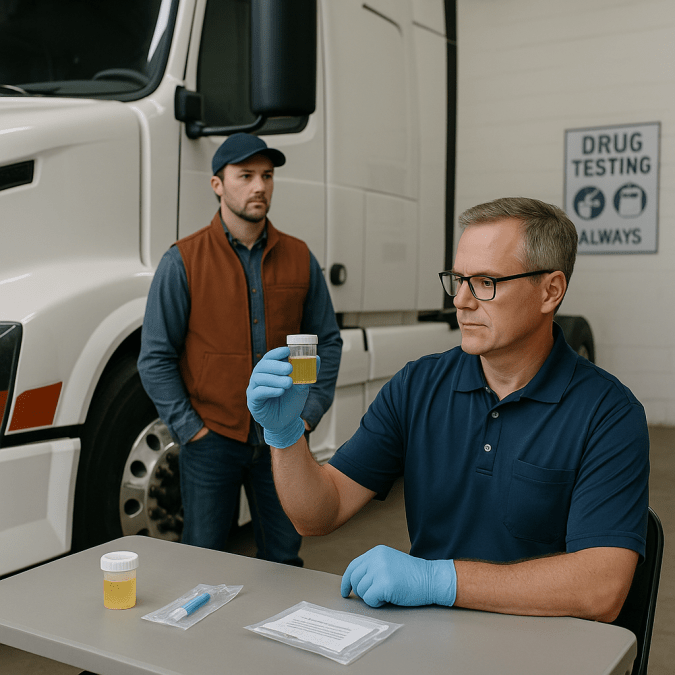
- Sample – For drugs, the worker provides a urine sample in a secure area. For alcohol, the breath device is used.
- Chain of custody – The sample is sealed with tamper tape, labeled, and logged. Both the worker and collector sign the form.
- Lab testing – A certified lab screens the urine. If the screen is non‑negative, the lab runs a confirmation test.
- Medical review – A Medical Review Officer (MRO) reviews any positive or questionable result and contacts the worker for medical proof that could change the outcome.
- Report – The employer receives the final verified result from the MRO.
A negative result lets the worker return to duty. A positive, refusal, or no‑show requires removal from safety‑sensitive work and starts a return‑to‑duty process.
Recordkeeping Rules
DOT record rules are strict:
- Five years – Keep positive results, refusals, and follow‑up plans.
- Two years – Keep test logs and training records.
- One year – Keep negative and canceled drug test results.
Store records in a secure place with limited access. Paper files must be locked. Digital files must use password protection and back‑ups.
Common Pitfalls and How to Avoid Them
- Late notifications – Always call or send the worker right away. Keep managers trained on the urgent timeline.
- Outdated pools – Audit your pool list at least each month. Remove former staff and add new hires right after orientation.
- Missed annual rates – Track your draw counts each quarter so you can catch up before year‑end.
- Poor documentation – Keep copies of lists, draw records, and result forms. Missing paperwork can lead to fines.
- Letting rumors spread – Remind staff that the program is about safety, not spying. Clear talk lowers stress and cuts gossip.
How Butterfield Testing Solutions Supports DOT Programs
Running a compliant program takes time. Butterfield Testing Solutions can cut that load:
- Pool management – We keep your worker list fresh, add new hires, and archive leavers.
- Random draws – Our software uses certified random math so every pick meets the rule.
- On‑site and clinic testing – We collect samples at your yard, shop, or office, or welcome workers at our Sherwood and Bend sites.
- 24/7 post‑accident response – If a crash happens after hours, we can dispatch a collector so you meet timelines.
- Record storage – Digital files stay on secure servers. Paper copies are stored in locked files for the full rule period.
- Audit help – When a DOT agent calls, we gather the needed files and join calls to explain your program.
Cost and Budget Tips
Random testing is an operating cost, but good planning keeps it steady:
- Use a consortium – Small fleets can join a shared pool, spreading costs while meeting the same rules.
- Bundle services – Combining random, post‑accident, and pre‑hire testing with one vendor often lowers unit prices.
- Plan draws early – Front‑load some draws to avoid a year‑end crunch that can raise rush fees.
Final Thoughts
DOT random drug testing is about trust. Passengers, the public, and your own team trust that every person behind the wheel or on the flight deck is fit to work. A well‑run program proves that trust is earned each day.
The rules can feel complex, but with clear steps and solid support, you can meet the standards without draining your time. Butterfield Testing Solutions stands ready to guide you through pool set‑up, draws, testing, and audits so you can focus on serving customers and moving goods with safety at the front.
Ready to build or improve your DOT random testing program? Visit butterfieldtestingsolutions.com or contact our team today. We are here to help you drive, fly, or ship with peace of mind.