When a driver walks into our clinic with a paper chain-of-custody form in hand, the clock is already ticking. Every minute spent away from the wheel costs money.
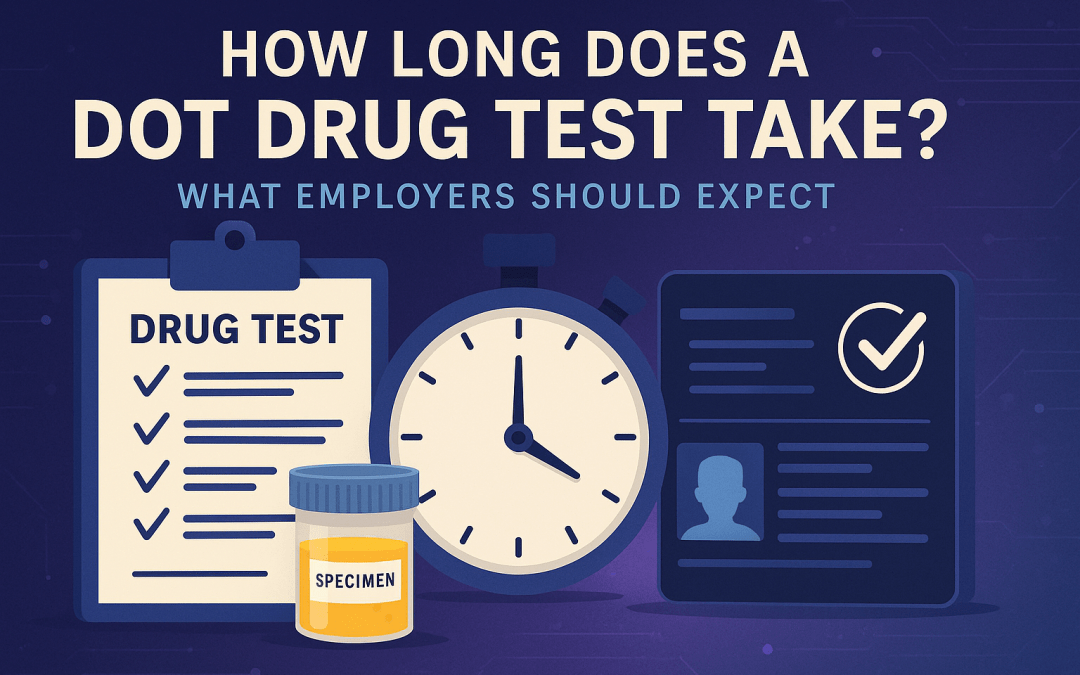
It’s no wonder that one of the most common questions we receive is this one: how long does a DOT drug test take?
That’s why we’ve put together this straightforward look at each stage of a Department of Transportation urine drug test, and what you can count on when you work with Butterfield Testing Solutions to handle it.
1. Collection Time at Our Site or Yours
A standard DOT urine collection is relatively quick. From the moment the driver steps to the counter, signs the form, secures belongings, and heads into the restroom, the process runs about three to five minutes. That time includes checking ID, reviewing the instructions, and sealing the sample.
If you invite our mobile unit to your yard, the stopwatch is the same. The only thing that changes is the drive we take so your team stays put.
A few factors can stretch the visit: extra paperwork for split specimen retests or the need for a direct-observation collection are common ones. Even with those bumps, most drivers are back on the road in ten to fifteen minutes.
2. Getting the Specimen to the Lab
DOT rules do not allow rapid “cup” tests. Every specimen heads to a Health and Human Services certified laboratory for the full immunoassay screen and, when needed, gas-chromatography confirmation.
Our courier bags go out twice a day from Sherwood and Bend, and our collectors hand off final afternoon loads to overnight carriers. Oregon clients can expect next-morning receipt at the lab in most cases. Winter storms or very rural pick-ups might add a day, but that is rare.
When you use our on-site service after hours, we still pack and ship before the last carrier pick-up whenever possible.
3. Lab Screening and Reporting
The lab completes the first screen soon after arrival. For straightforward negatives, electronic reports come back to our Medical Review Officer in roughly twenty-four hours. We flag those files as “reported” in your portal the same day.
If the screen shows any hint that a drug might be present, the lab runs a confirmation. That extra step is why a final positive, adulterated, or substituted result can take three to five days. It feels slow, but it’s vital to be sure the finding will stand if challenged.
4. MRO Review and Employer Notice
DOT Part 40 lays out a clear path once the lab work is done. Our MRO reviews every record, signs off on negatives, and, in the case of a non-negative, calls the driver to talk through any valid prescriptions. The MRO must make an earnest attempt to reach the donor within twenty-four hours. When contact is made and any proof of legal use is verified, the doctor may downgrade the result to negative. If no contact is made within a short window, the MRO can release the positive to the employer as long as call attempts are documented.
For most clean tests, the MRO step adds less than an hour. More complex cases add a day or two but protect both the driver’s rights and your compliance record.
5. Total Turnaround: What the Numbers Look Like
Collection is the fastest part of the process, wrapping up in three to five minutes unless a shy bladder or missing paperwork slows things down. Once the sample leaves our hands, overnight shipping puts it on a lab bench the next business morning for nearly every Oregon client. A routine lab screen takes about one working day.
If the sample is negative, it moves straight to our Medical Review Officer and appears in your portal within twenty-four to thirty-six hours after the driver checked in. When the lab detects a possible drug and runs the confirmation test, the timeline stretches by two to three days.
The MRO then reviews the findings, speaks with the driver if needed, and posts the final report. Add it all together and you can plan on a three to five business-day window for any result that requires confirmation and doctor review.
Breath Alcohol Tests That Travel with the Driver
Many post-incident or reasonable-suspicion events call for breath alcohol along with urine. A certified technician performs the breath screen in roughly five minutes, and results are ready on the spot. Pairing the two tests does not add real time on the front end, yet it gives you the full story should something go wrong on the road.
How Butterfield Keeps the Clock Short
- Around-the-clock collectors: Our mobile crews are on duty 24/7, 365 days. Late-night pulls no longer wait for the clinic to open.
- Electronic chain-of-custody: We use eCCF whenever the lab allows. That cuts handwriting delays and errors that force recollection.
- Two Oregon clinics plus statewide mobile reach: Drivers can stop at Sherwood or Bend clinics from seven to five on weekdays, or we come to them anywhere in the state.
- Live status portal: Employers track each step in real time. No phone tag needed.
- In-house MRO: Our doctor sits down the hall, not across the country, so verified results flow faster.
When Timing Really Counts: Post-Crash Scenarios
Federal crash rules require the employer to test a CDL driver within thirty-two hours of an incident that meets set injury or tow criteria. Our on-call teams usually reach Oregon crash sites in under two hours, collect, and start the shipping clock the same night. That rapid response keeps you in line with Part 382 and avoids citations for late testing.
Final Thoughts
A DOT drug test is not just a cup in a bathroom. It’s a chain of events with four handoffs: collector to courier, courier to lab, lab to MRO, MRO to employer. When each handoff is tight, negatives are back the next day and positives wrap up in under a week.
Butterfield Testing Solutions builds every step of our service to hit those marks and give carriers the facts they need to keep freight moving and roads safe.
Ready to set up faster, smoother DOT testing? Call us today!